Building a First Aid & Trauma Kit That Goes Beyond the Basics
When emergencies happen, you don’t get to choose the time, place, or severity of the situation. Whether it’s a scraped knee at the playground, a kitchen accident, or something more serious like heavy bleeding or trauma, one thing is always true: you are the first responder. You may be your child’s, your family’s, or even a stranger’s first and only chance at immediate care before professional help arrives.
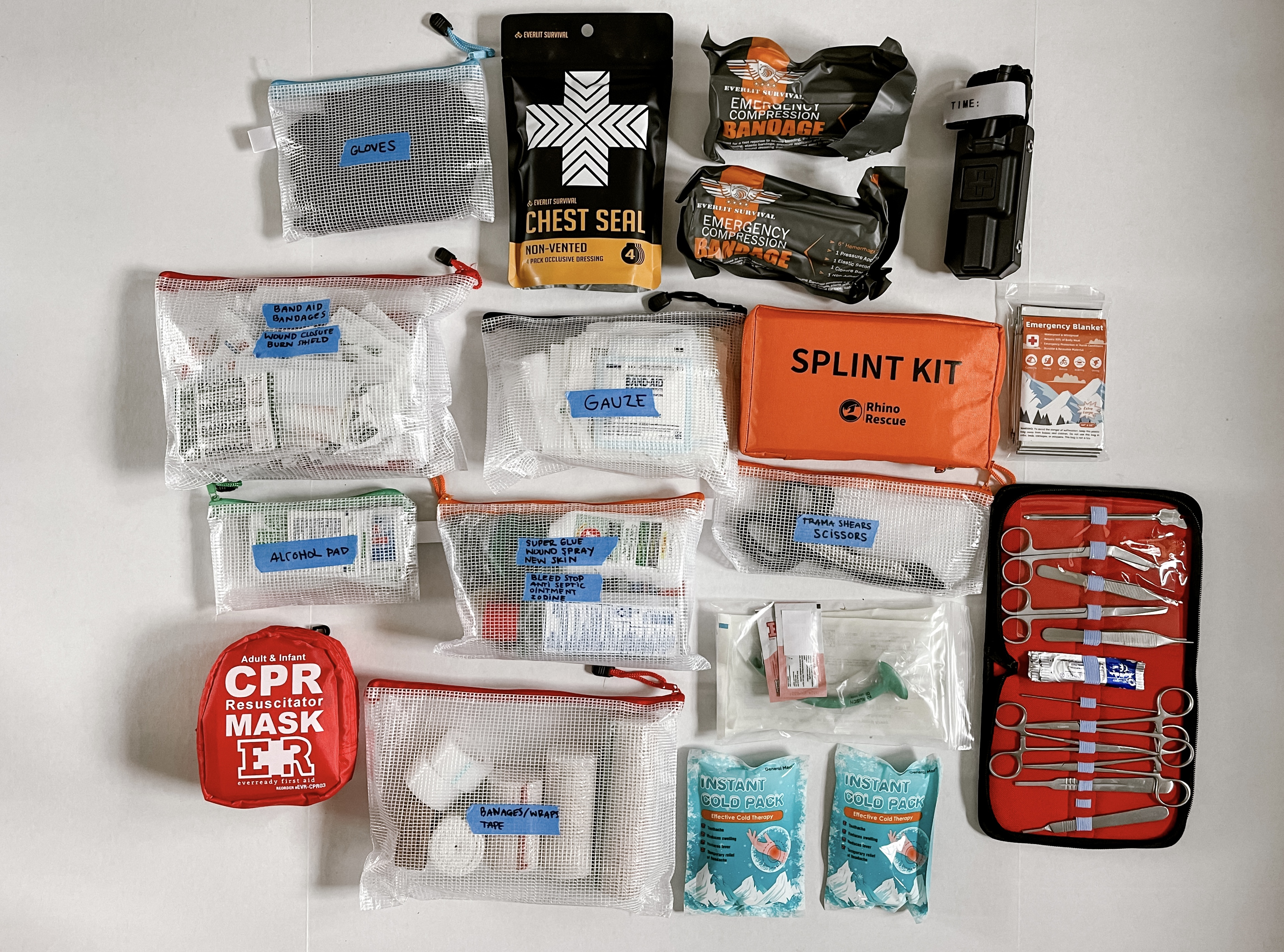
While pre-made first aid kits are convenient, most of them are limited to adhesive bandages and a few antiseptic wipes. They’re simply not enough for real-world emergencies. Building your own comprehensive first aid and trauma kit gives you peace of mind knowing that you’re prepared for anything—from minor cuts to life-threatening injuries.
Here’s a breakdown of essential items to include in your custom kit, plus why each one matters.
This post contains affiliate links, which means that if you click on and/or make a purchase using some of the links in this post, I may earn a commission at no extra cost to you. Read my full disclosure policy here.
Wound Care Essentials
- Band-Aids
- The most basic but most used supply. Perfect for covering small cuts, scrapes, and blisters to protect them from dirt and infection.
- Bandages (variety of sizes)
- Larger adhesive bandages can cover wounds that are too big for standard Band-Aids. Having multiple sizes ensures you can treat injuries of all kinds.
- Gauze Pads
- These are sterile and highly absorbent, used to cover wounds, absorb blood, and protect against contamination.
- Gauze Rolls
- Ideal for wrapping larger wounds, securing dressings, or adding padding around injuries.
- Transparent Film Dressing (Waterproof)
- Keeps wounds protected from water, dirt, and bacteria while allowing you to monitor healing without removing the bandage.
- Wound Closures (Steri-Strips or Butterfly Closures)
- Used to hold the edges of a small but deep cut together when stitches aren’t available.
- Liquid Bandage
- A fast and effective way to seal minor cuts and scrapes, especially on hands or areas where adhesive bandages may peel off.
- Super Glue
- In survival or trauma scenarios, it can be used (carefully!) to close small wounds temporarily when other options aren’t available.
Cleaning & Infection Control
- Alcohol Pads
- Quick disinfectant for cleaning the skin before dressing a wound or before using tools like tweezers.
- Antiseptic Wound Wash
- Gentle solution for rinsing out dirt and bacteria from wounds, reducing infection risk.
- Iodine
- A strong antiseptic that kills bacteria and can disinfect skin or wounds in a pinch.
- Bactine Spray
- Provides both antiseptic cleaning and pain relief, making it especially helpful for children.
- Ointment (like antibiotic cream)
- Applied after cleaning a wound to prevent infection and speed healing.
- Medical Gloves
- Always wear gloves before treating a wound. They protect both you and the injured person from bloodborne pathogens. (Include multiple pairs in your kit.)
Bleeding Control & Trauma Care
- Bleed Stop (Hemostatic Agent)
- A special powder or impregnated dressing that accelerates clotting to control severe bleeding.
- Compression Bandage
- Applies firm, consistent pressure to a wound to stop bleeding—critical in trauma care.
- Tourniquet
- Used to control life-threatening bleeding from an arm or leg when direct pressure isn’t enough. This tool saves lives in severe trauma situations.
- Chest Seals
- For penetrating chest wounds, chest seals prevent air from entering the chest cavity, helping stabilize breathing until help arrives.
- Trauma Shears
- Heavy-duty scissors that cut through clothing, seatbelts, or gear quickly to access an injury site.
Burn & Cold Injury Care
- Burnshield Wrap
- A sterile dressing that cools burns, relieves pain, and prevents further tissue damage.
- Cold Compress (Instant Ice Pack)
- Reduces swelling, bruising, and pain for sprains, bumps, or burns.
Stabilization & Support
- Splints
- Lightweight and moldable supports to immobilize fractures or sprains. Prevents further injury until medical care is available.
- Ace Bandages (Elastic Wraps)
- Great for compression, securing splints, or supporting injured joints.
- Medical Tape
- Secures dressings, gauze, or splints in place. Choose a strong but skin-safe option.
Airway & Breathing Support
- CPR Mask
- Provides a barrier during rescue breathing, protecting both you and the patient during CPR.
- Nasopharyngeal Airway (NPA)
- A soft tube inserted through the nose to keep the airway open if someone is unconscious but still breathing.
- Airway Emergency Tools
- Depending on your level of training, specialized tools can help clear or secure an airway in life-threatening emergencies.
Small but Mighty Tools
- Tweezers
- For removing splinters, ticks, or debris from wounds.
Final Thoughts
Emergencies don’t ask permission to happen—they strike without warning. Having a well-stocked first aid and trauma kit means you won’t be caught unprepared when it matters most.
A pre-made kit is fine for bumps and scrapes, but building your own ensures you’re ready for everything from a child’s scraped knee to severe trauma that requires bleeding control and airway management. Remember, you are the first responder—to your family, your children, or even a stranger in need. The right supplies can make all the difference.
 The Sager Home